Why Local SEO Is More Critical Than Ever for Your Business
In 2026, the digital landscape for businesses is increasingly fragmented, but one constant remains: proximity matters more than ever. Over 80% of consumers use search engines to find local businesses, and nearly 50% of all Google searches have local intent. For any business with a physical location or serving a specific geographic area, ignoring Local SEO is akin to keeping your doors locked during business hours.
The problem many businesses face is outdated strategies. Relying solely on basic keyword optimization or a sporadic Google Business Profile update simply won’t cut it anymore. With voice search, AI-driven local results, and fierce competition, you need a robust, current strategy to ensure your business appears exactly when and where local customers are searching.
This guide will unveil the most effective Local SEO strategies for 2026, offering actionable steps to help your business dominate local search results and drive foot traffic or local service calls.
Featured Snippet Definition: What is Local SEO?
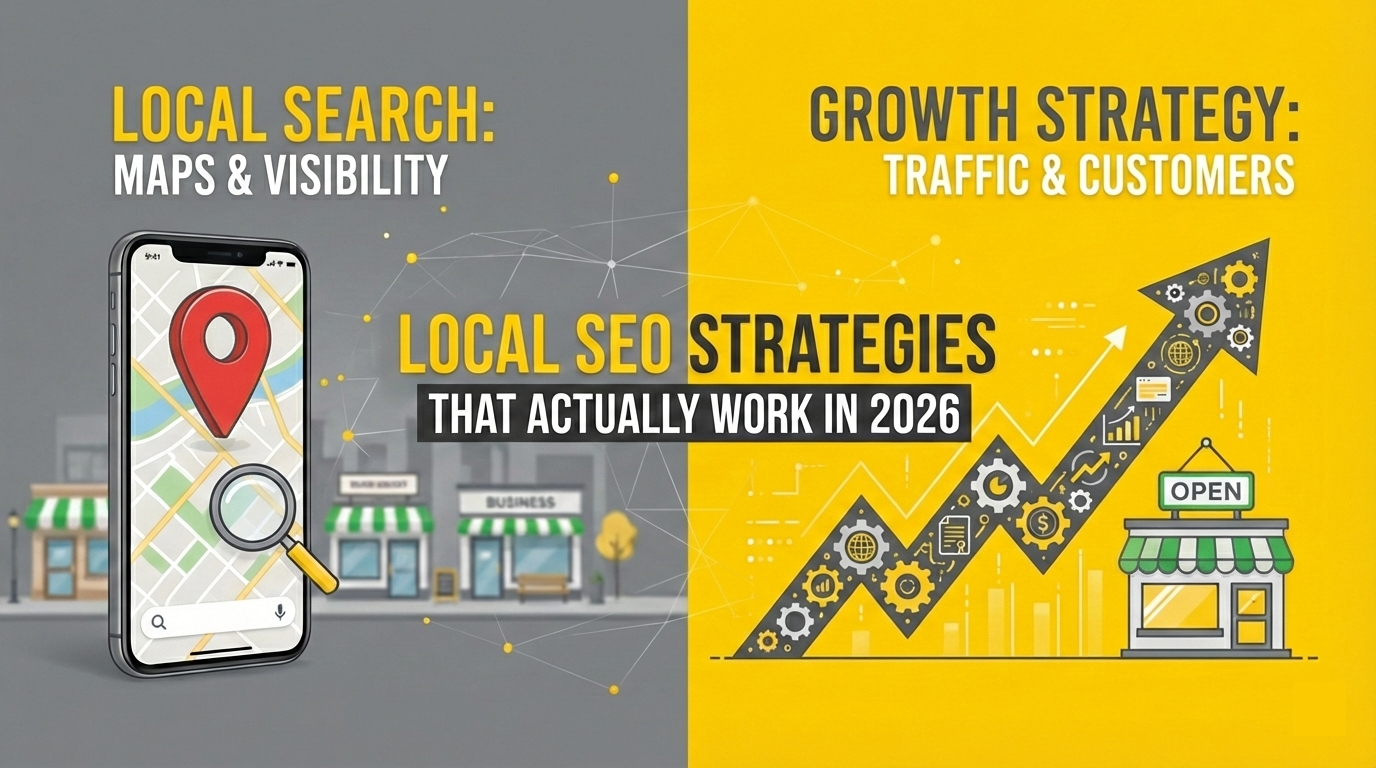
Local SEO is the process of optimizing your online presence to attract more business from local searches. This involves ranking prominently in Google Maps, the “local pack” (a box showing 3 businesses near the top of the search results), and organic results for location-specific queries.
How to Implement Winning Local SEO Strategies in 2026
Effective Local SEO in 2026 demands a multi-faceted approach, focusing on distinct areas that Google’s algorithm prioritizes.
1. Google Business Profile (GBP) Optimization: Your Digital Storefront
Your Google Business Profile (formerly Google My Business) is the single most important local ranking factor. It’s your free, public face on Google Search and Maps.
- Complete All Sections: Ensure every field is filled out accurately and completely. This includes business hours, services, product lists, website, phone number, and a detailed description.
- Choose Primary & Secondary Categories Wisely: Be specific. For example, instead of “Restaurant,” use “Italian Restaurant” and “Pizza Restaurant.”
- High-Quality Photos & Videos: Regularly upload geo-tagged photos of your storefront, interior, products, and team. Businesses with more photos receive more clicks.
- Manage Reviews Proactively: Encourage customers to leave reviews, and respond to all reviews—positive and negative—with professionalism. This builds trust and boosts engagement signals.
- Utilize GBP Posts: Use GBP’s “Posts” feature for updates, offers, events, and product announcements. This keeps your profile active and provides fresh content for local searchers.
Actionable Step: Dedicate at least 30 minutes weekly to managing and updating your GBP. It’s a dynamic profile, not a set-it-and-forget-it tool.
2. Local Citations & Directory Listings: Consistency is Key
Citations are mentions of your business’s Name, Address, and Phone number (NAP) across the web. Consistency is paramount.
- Build Foundational Citations: Ensure your business is listed accurately on major data aggregators (Yelp, Yellow Pages, etc.) and industry-specific directories.
- NAP Consistency: Your NAP information must be identical across all online platforms—your website, GBP, social media, and directories. Inconsistencies confuse search engines and harm rankings.
- Citation Audit & Cleanup: Regularly audit your existing citations for errors and outdated information. Tools can help identify discrepancies that need correction.
Actionable Step: Use a spreadsheet to track all your local listings and manually verify NAP consistency every quarter.
3. Hyper-Local Content & On-Page Optimization: Speak to Your Neighborhood
Your website needs to clearly signal its local relevance through content and technical elements.
- Location-Specific Landing Pages: If you serve multiple areas, create dedicated, optimized landing pages for each location.
- “Near Me” Optimization: Integrate “near me” phrases or implied local intent into your content (e.g., “best pizza in downtown Seattle“).
- Local Keywords: Research and incorporate keywords like “plumber [city name],” “coffee shop [neighborhood],” or “dentist [zip code]” naturally into your service pages and blog posts.
- Schema Markup (Local Business Schema): Implement structured data markup to provide search engines with explicit information about your business, including address, phone, hours, and reviews.
4. Local Link Building & Community Engagement: Earn Local Trust
Backlinks from other local businesses and community organizations are incredibly powerful.
- Local Partnerships: Collaborate with complementary local businesses for cross-promotion and link opportunities.
- Sponsor Local Events: Sponsoring school events, charity drives, or local sports teams can lead to website mentions and backlinks.
- Testimonials & Features: Offer testimonials to other local businesses in exchange for a link or seek opportunities to be featured in local news or blogs.
We Believe: Your Local Advantage Starts Today
At Digitreams, what we have found is that businesses excelling in Local SEO don’t just see more traffic; they see more qualified traffic ready to convert. Local searchers are often further down the purchasing funnel, actively looking for a solution now.
Our recommendation for 2026 is a holistic approach:
- Prioritize GBP: It’s your hub for local search.
- Be Consistent Everywhere: NAP consistency is non-negotiable.
- Think Like a Local: Create content that directly answers local queries.
- Engage with Your Community: Build real-world and digital relationships.
Conclusion
Local SEO isn’t just a tactic; it’s an essential strategy for any business aiming to thrive in its geographic market. By meticulously optimizing your Google Business Profile, ensuring NAP consistency, crafting hyper-local content, and building genuine local authority, your business can significantly improve its visibility, attract more customers, and secure a dominant position in local search results for 2026 and beyond.
Frequently Asked Questions (FAQs)
Q: How long does it take to see results from Local SEO?
A: While some GBP updates can be almost immediate, significant ranking improvements from a comprehensive Local SEO strategy typically take 3-6 months, depending on competition.
Q: Is it okay to have multiple Google Business Profiles for one business?
A: No. You should only have one GBP per physical location. If you have multiple locations, each one should have its own verified GBP.
Q: Do social media signals impact Local SEO?
A: Directly, less so for rankings. Indirectly, yes. Active social media engagement can increase brand mentions, website traffic, and customer reviews, all of which contribute positively to Local SEO.
Q: What is the “Local Pack” in Google Search? A: The “Local Pack” is a set of 3 business listings with their addresses, phone numbers, and ratings that appears prominently at the top of Google’s search results for local queries, often above organic results.