Why Your Ad Budget Isn’t Delivering Results
In the crowded world of digital advertising, a common nightmare plagues marketing managers and business owners alike: spiraling costs and stagnant results. You are spending more money just to get people to your site, but fewer of them are taking action once they arrive.
This phenomenon—high Cost Per Click (CPC) combined with low conversion rates—is the fastest way to drain a marketing budget. The root cause is often a disconnect between what the user is searching for, the ad they see, and the page they land on. When these elements aren’t aligned, platforms like Google and Facebook charge you a premium for visibility, and users leave frustrated.
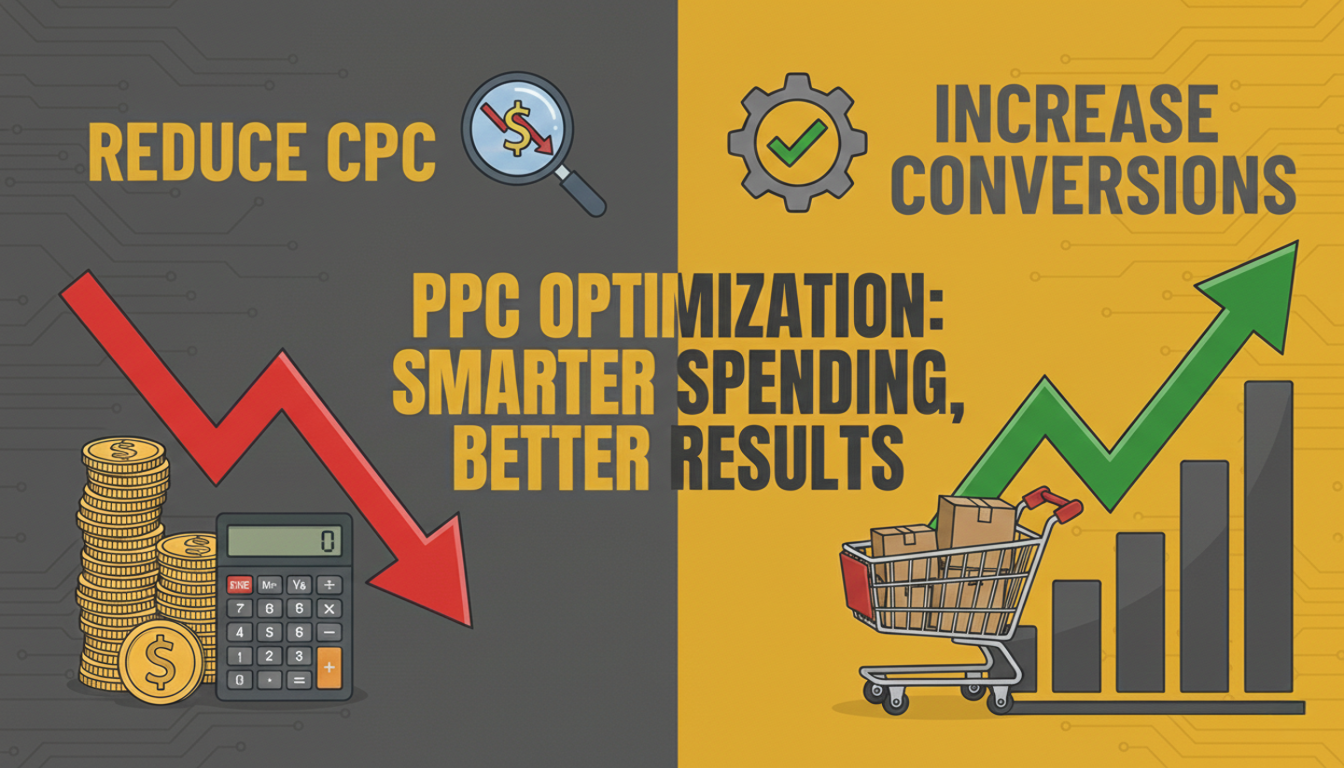
At Digitreams, we understand that the goal isn’t just cheap traffic; it’s profitable action. To maximize your Return on Ad Spend (ROAS), you need a dual-pronged approach: driving down the cost of acquisition while simultaneously improving the rate at which visitors become customers.
Here is a quick overview of the core strategies we use to achieve this balance:
The 5 Essential Strategies for Better PPC Performance:
- Mastering Platform “Quality Scores.”
- Utilizing Long-Tail and Negative Keywords.
- Optimizing Post-Click Landing Pages.
- Refining Audience Targeting and Retargeting.
- A/B Testing Ad Copy and CTAs.
How to Lower Costs and Boost Sales: 5 Actionable Steps
Reducing CPC while increasing conversions requires moving away from “set it and forget it” campaigns and toward active, data-driven optimization. Here is how to execute the five proven strategies.
1. Obsess Over Your Quality Score (Google Ads) or Relevance Score (Meta)
Platforms reward relevance. Google’s Quality Score (on a scale of 1-10) is essentially a discount mechanism. A higher score means you pay less for a higher ad position. The score is calculated based on three factors: expected click-through rate (CTR), ad relevance to the search term, and landing page experience.
Actionable Steps:
- Tighten Ad Groups: Don’t stuff 50 keywords into one ad group. Create smaller, highly themed groups so your ad copy directly matches the keywords trigger it.
- Improve CTR: Write compelling ad copy that addresses the user’s intent immediately.
The Digitreams Take: In our experience, raising a Quality Score from a 5 to an 8 can sometimes cut CPC by 30-40%. We treat Quality Score optimization not as a technical chore, but as the foundation of budget efficiency.
2. Leverage Long-Tail Precision and Negative Keywords
Broad keywords are expensive and competitive. “Running shoes” will have a massive CPC and low intent. “Best women’s trail running shoes for overpronation” has lower search volume, but the user is ready to buy. Furthermore, you must stop paying for irrelevant clicks using negative keywords.
Actionable Steps:
- Embrace Long-Tail: Use tools like SEMrush or Google Keyword Planner to find specific, three-to-five-word phrases with clear purchase intent.
- Weekly Search Term Audits: Review the actual terms people used to trigger your ads. If you sell high-end software, add “free,” “cheap,” or “cracked” to your negative keyword list immediately.
3. Optimize the Post-Click Landing Page Experience
You paid for the click; now you have to earn the conversion. If your ad promises a specific discount on a specific product, but the landing page is your generic homepage, the user will bounce. This wastes your ad spend and hurts your Quality Score, driving up future CPC.
Actionable Steps:
- Message Match: Ensure the headline on your landing page mirrors the headline in your ad copy.
- Speed is Critical: Ensure your mobile page loads in under three seconds. Every second of delay drastically reduces conversion rates.
- Clear Call to Action (CTA): Make the desired action (e.g., “Get a Quote,” “Buy Now”) obvious and easy to complete.
4. Refine Audience Targeting and Utilize Retargeting
Showing ads to everyone is a recipe for high CPC. You need to narrow your focus to those most likely to convert.
Actionable Steps:
- Layered Targeting: On platforms like Meta (Facebook/Instagram), combine demographics with interests and behaviors to ensure ad relevance.
- Implement Retargeting Campaigns: Retargeting involves showing ads to people who have already visited your site but didn’t convert. These audiences almost always have a lower CPA (Cost Per Acquisition) because they are already familiar with your brand.
What We Have Found: We highly recommend allocating at least 15-20% of your budget to retargeting. These campaigns often serve as the “closer,” converting warm leads that would otherwise be lost.
5. Relentlessly A/B Test Ad Copy and CTAs
Boring ads cost more money. If nobody clicks your ad, platforms view it as irrelevant and raise your costs to show it. Conversely, a high CTR lowers your CPC.
Actionable Steps:
- Test the Hook: Run two versions of an ad simultaneously. Try one that focuses on emotional benefits versus one focusing on logical features.
- Test the CTA: Does “Shop Now” perform better than “See the Collection”? You won’t know until you test. Only change one variable at a time for clear data.
Conclusion
Reducing CPC and increasing conversions are not separate goals; they are interconnected gears in your digital marketing engine. By focusing on relevance—connecting the right person with the right message and a seamless landing page experience—you naturally improve platform scores, which lowers your costs.
At Digitreams, we believe that successful PPC campaigns require constant nurturing. By implementing these five strategies, you can stop wasting budget on expensive, empty clicks and start generating meaningful ROI.
Frequently Asked Questions (FAQs)
Q: Is a lower CPC always better?
A: Not necessarily. Extremely cheap clicks often come from irrelevant traffic that never converts. The goal is the lowest possible CPC for high-intent traffic. We focus on CPA (Cost Per Acquisition) as the ultimate metric of success.
Q: How long does it take to see results from these strategies?
A: Some changes, like adding negative keywords, can show results within days. Others, like improving Quality Score through landing page optimization, may take 4-6 weeks to significantly impact your average CPC.
Q: What is a “good” conversion rate?
A: This varies wildly by industry. E-commerce might aim for 2-4%, while B2B lead generation might aim for 5-10%. The most important benchmark is your own historical data—aim to improve month-over-month.